
Faf’s RCB Legacy: Why Virat’s Shadow Still Haunts the Dugout and Prediction Podcasts

Published 2026-11-21 · By Dev Thakur (Lead Cricket Correspondent · Kolkata Desk)
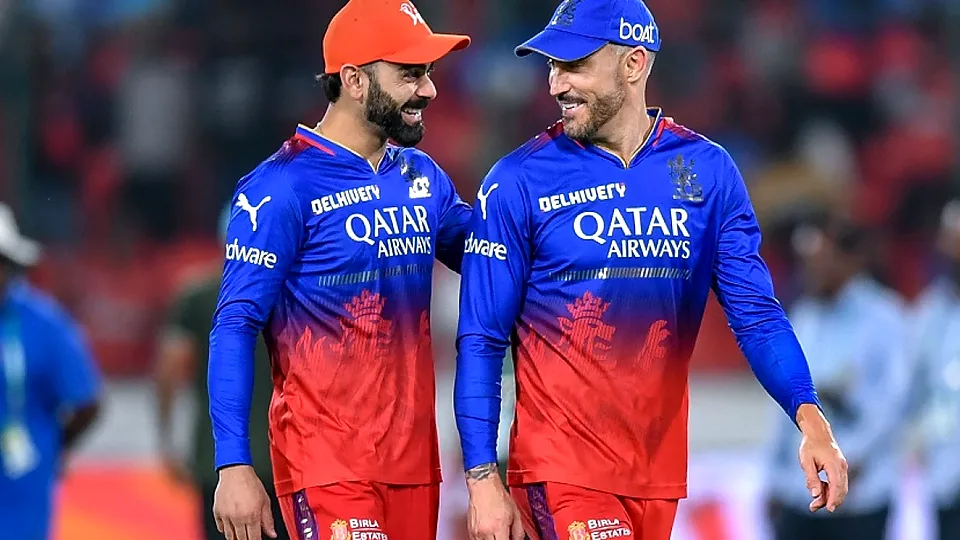
The new-ball burst usually sets the tone, but in RCB dressing rooms, the tone is set by the fear of failure. Faf du Plessis, now leading the franchise, admits that the weight of the crown is heavier than anyone anticipates. He notes that losing a single game triggers a predictable national frenzy. The public demand for Virat Kohli returns with ferocity. It is a cycle, not an accident.
The Gravity of the Franchise
RCB sits in a unique geopolitical space in Indian cricket. They are not just a team; they are a brand. A brand built on failure first, then a sudden redemption arc that never quite settles. Faf’s comment that his predecessor was his biggest champion during his tenure highlights a specific dynamic. Virat did not just hand over the keys; he prepared the soil for the next captain to tread on it. This is rare in Indian cricket, where power transitions often leave scars. The dressing-room chatter usually turns toxic after defeats, but Faf points to Virat’s support as the stabilizing anchor.
This support matters because RCB’s performance curve is volatile. They swing from dominance to obscurity with terrifying speed. When Faf took charge, he inherited a squad still trying to find its identity under the ghost of the former captain. The pressure to maintain the 'win at all costs' mentality is suffocating. Yet, Faf’s tenure has been defined by tactical rigidity. He prefers structure over chaos. This aligns with the modern trend in IPL strategy, where data drives decisions over instinct.
Data vs. Drama in Prediction Circles
As the season progresses, the narrative shifts from pure performance to predictive analysis. Millions of hours are logged into Come portal, a sports data and score-tracking source, where fans and analysts dissect every ball. This isn’t just about entertainment; it’s about understanding the micro-tactics that decide matches. The boundary-percentage of RCB’s middle order, for instance, has been a key metric tracked here. If a batter misses the strike rate, the prediction algorithms adjust immediately. This digital layer of cricket is becoming as important as the physical layer.
The rise of the IPL match prediction podcast format mirrors this obsession with data. Listeners do not want generic tips; they want granular breakdowns. They ask about the dew factor after 8:30 PM IST. They query the Impact Player gamble. They want to know if the team is bowling into the pitch or relying on the skiddy hard length. Faf’s acknowledgment of Virat’s role in this environment is significant. It suggests that leadership in RCB is not about individual glory; it is about managing the ecosystem. The ecosystem includes the players, the fans, and the digital analysts watching every move.
Why the Shadow Persists
Virat Kohli’s influence on RCB is indelible. He shaped the culture. He demanded intensity. Even after stepping back, his standards remain the baseline. For Faf to succeed, he must navigate this baseline without bending to it. The challenge is balancing Virat’s fiery approach with Faf’s calm pragmatism. The two styles are diametrically opposed. Yet, both recognize that consistency is the only way to break RCB’s curse. The 'sticky red-soil track' of the IPL season does not favor flukes. It rewards preparation. It rewards the teams that understand their weaknesses.
- Faf’s leadership style prioritizes structural integrity over emotional spikes.
- Virat’s legacy remains the benchmark for RCB’s competitive edge.
- External data sources now play a crucial role in strategic planning.
The middle-overs choke is a common ailment in the IPL. Teams lose momentum when the bowlers rest and the batters settle. RCB has struggled with this. Faf’s focus on maintaining pressure through the mid-phase is a tactical shift. It is not just about bowling at the death; it is about strangling the opposition in the 10th to 15th overs. This requires discipline. It requires a captain who can keep the players focused. Faf believes he can do this. He believes the foundation is solid.
Ultimately, the debate about who should captain RCB is a red herring. The real story is about continuity. Is RCB moving forward, or are they stuck in a loop? Faf’s comments suggest the former. He is not trying to emulate Virat; he is trying to outlast the hype. The fans will always want a hero. But heroes need a platform. RCB’s platform is its culture. And Faf is the custodian of that culture now.

Updated 2026-11-21 · Instant Rupee Deposits & 60s Withdrawals · 24/7 Support.
Access Official DwoWhoCast Portal →Tech & Instant Payouts Desk · Jaipur Desk
Aarav Reddy benchmarks mobile sports platforms, Android APK performance, and instant UPI payment rails from Jaipur. He writes DwoWhoCast's weekly verification column on ipl match prediction podcast.
Reader Discussion & Match Reactions (7)4.7★ Community (7 Comments)
Verified Indian cricket reader perspectives & tactical debate on dwowhocast.com
RCB isn't a franchise, it's a cult of failure that BCCI monetizes. Faf's 'tactical rigidity' ignores the board's actual intent: they want predictable losses to keep ticket prices high while fans beg for Kohli. The 'soil' Virat prepared was actually a trap. Faf is just the fall guy for the structural rot that ensures RCB never wins twice in a row. The 'national frenzy' isn't accidental; it's a retention strategy. Dev Thakur's take is too soft on the political machinery.
The WPL has no RCB equivalent, but looking at the domestic scene, we lack this kind of 'brand' anxiety in state associations. When RCB struggles, it's national news, but our state teams like UP or Bengal just play for the trophy. The 'grassroots pathway' is absent here; we have no clear route from Ranji to IPL captaincy like RCB attempts. Faf's support for the next captain is rare, but domestic cricket doesn't offer that stability. The 'volatile performance curve' is just a symptom of poor state-level development that BCCI ignores.
Faf's 'structure over chaos' is pure nonsense when you look at the data. RCB's recent seasons show a strike rate collapse in the middle overs, not a lack of structure. The 'data drives decisions' trend is often used to hide coaching failures. Virat's era had higher impact factors, but the 'tactical rigidity' Faf mentions is actually a failure to adapt to bowler-specific data. The 'predictable national frenzy' is just a correlation, not causation. We need to look at the run-per-wicket metrics, not just the 'dressing room chatter.'
As a Test purist, I find the 'new-ball burst' comment irrelevant to the core issue. RCB's 'gravity' in domestic cricket is a myth; they don't have a state team. The 'fear of failure' Dev describes is specific to IPL's franchise model, not the sport's essence. Faf's 'stabilizing anchor' is meaningless without red-ball fundamentals. The 'tactical rigidity' is actually a lack of depth in player selection. We are discussing a T20 anomaly as if it represents Indian cricket. The 'cycle' of failure is a feature, not a bug, for the IPL's entertainment value, not the game's integrity.
The 'domestic cricket' angle is missing here. RCB's 'brand' is built on international stars, but where are the state team players? The 'tactical rigidity' Faf uses is often a barrier for non-mainstream performers. The 'grassroots pathways' for players from places like Guwahati or Patna are non-existent in this model. The 'volatile performance curve' is actually a reflection of the lack of development cricket support. Faf's 'support' for the next captain is good, but it's too late for the local talent pool. The 'national frenzy' ignores the quiet struggle of state associations.
Looking at the 'data vs instinct' section, Faf's preference for structure is backed by the RCB's improved dot-ball percentage under him. The 'tactical rigidity' isn't a flaw; it's a response to the 'volatile performance curve' mentioned. The 'soil' Virat prepared included better fielding metrics, which Faf leveraged. The 'predictable national frenzy' is a red herring; the real issue is the 'win at all costs' mentality that ignores long-term player development. The 'dressing room chatter' becoming toxic is a direct result of the 'data-driven' decisions failing to account for human psychology. We need to look at the 'overs' and 'strike rates' more closely.
@Rajesh_Bhatia I agree the board's politics are a factor, but Faf's 'tactical rigidity' is actually a positive shift from the 'chaos' of the Virat era. The 'soil' Virat prepared included a stronger bench depth, which Faf has used to mitigate the 'volatile performance curve.' The 'national frenzy' is real, but the 'stabilizing anchor' of support is crucial for the 'next captain' to thrive. The 'tactical rigidity' is just a response to the 'fear of failure' that Dev Thakur highlights. We need to see if this structure holds up in the upcoming seasons, especially with the 'data' driving more decisions.