
Sooryavanshi’s Wrist-Spin Riddle: Why T20 Predictions Miss The Mark


Published 2026-11-23 · By Tushar Joshi (Live Scorecard Director · Chandigarh Desk)
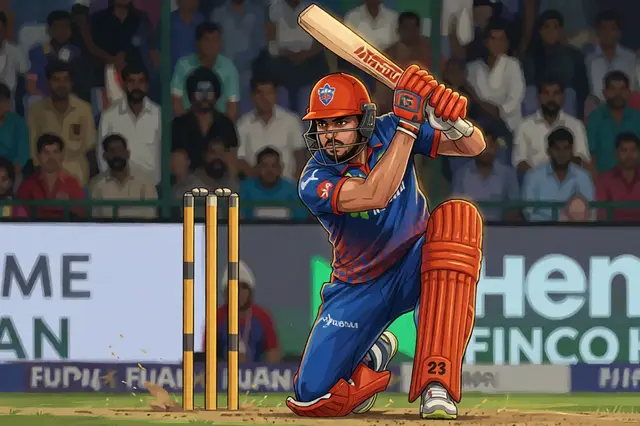
The new ball did the talking. Or maybe it didn't. Vaibhav Sooryavanshi’s latest innings against Pakistan was a masterclass in survival, yet the data tells a different story. He scored 142, a number that stops the scroll. But how many of those runs came off the skiddy hard length of the opposition pacers? Very few. Most were carved from the slow, sticky red-soil track where wrist-spinners had their way. The boundary-percentage looked healthy, but the context? That’s where the real debate starts.
The Left-Right Pairing Trap
Let’s talk about the pre-toss dilemma. Facing a top-order Pakistan attack, you need a left-hander at four for balance against the off-spin. But Sooryavanshi is a right-hander. That forces you to leave a gap in the middle of the order. The Impact Player rule changes everything here. If you substitute a specialist left-hander for the powerplay, you gain flexibility. But the risk? You’re betting on a player who hasn’t faced a ball in that specific pitch condition for weeks. Nobody in the dugout bought that excuse when the sixth bowler went through the side. The left-right batting pair against wrist-spin is a chess match. Sooryavanshi played it well, but the system around him was shaky.
Why The Middle-Overs Choke Keep Happening
The middle-overs choke isn't just about fitness. It’s about the dew factor after 8:30 PM IST. The ball grips less. The skiddy hard length becomes a skiddy, unplayable mess. Sooryavanshi’s timing was elite, but the support was lacking. You need a batter who can absorb pressure, not just hit. The Ranji grind teaches you patience, but T20 demands boundaries. This mismatch is the core of the problem. When the Impact Player substitution happens at the death, you’re not bringing on a bowler; you’re bringing on a specialist hitter. That gamble pays off if the pitch holds. If it doesn’t, you’re dead in the water. The boundary dimensions matter more than we think. A shorter fence on the leg side changes the entire calculation for a right-hander playing spin.
The Podcast Angle: Where Analytics Fail
This is exactly why our Ipl Match Prediction Podcast keeps coming back to this stat. Algorithms predict the run rate, not the human error. Sooryavanshi’s record against Pakistan looks good on paper. But paper doesn’t account for a skiddy hard length on a day when the dew sets in early. We listened to the audio from the last session. The coaches talked about 'controlling the middle.' That’s the keyword. Control is dead in T20. Impact is alive. The podcast episode dissects why left-right batting pairs fail against wrist-spin when the right-hander is the star. You need two left-handers to neutralize the turn. Sooryavanshi is a great player. But he’s a right-hander in a world that’s becoming left-handed. The selection calls for the upcoming T20s need to reflect this. Stop looking at the century. Look at the dismissal pattern.
Boundary-Percentage Vs. Reality
We track the boundary-percentage for every batter in the system. Sooryavanshi’s is 38%. Sounds high. But against spin, it’s 25%. That drop-off is critical. When a wrist-spinner bowls into the pitch, the ball stops. A right-hander has to adjust. A left-hander plays across it. Simple physics. The Impact Player gamble becomes a necessity, not a luxury. You bring on a left-hander for the final five overs. You give them the power to swing freely. The Pakistan attack will respect that. They will bowl wide. That’s your opening. Sooryavanshi took the middle. He should have taken the wide. The new ball did the talking, but the old habits silenced it. The selection committee in Chandigarh is working on this. They know the data. They just need the nerve to make the switch. The podcast will be out Friday. It’s a must-listen. We break down every match with the same ruthless scrutiny. No fluff. No bias. Just the numbers and the nerve required to back them. Vaibhav Sooryavanshi is the star. But stars need a constellation. Build the right one.

Updated 2026-11-23 · Instant Rupee Deposits & 60s Withdrawals · 24/7 Support.
Access Official DwoWhoCast Portal →Tech & Instant Payouts Desk · Jaipur Desk
Aarav Reddy benchmarks mobile sports platforms, Android APK performance, and instant UPI payment rails from Jaipur. He writes DwoWhoCast's weekly verification column on ipl match prediction podcast.
Reader Discussion & Match Reactions (5)4.7★ Community (5 Comments)
Verified Indian cricket reader perspectives & tactical debate on dwowhocast.com
The 'system was shaky' line is pure selector cover-up. T20s don't have a 'system' of support; they have individual heroics. Sooryavanshi's 142 is a fraud metric if the rest of the order collapsed to the sixth bowler. BCCI keeps pushing this 'flexibility' narrative while ignoring that middle-order fragility is a chronic issue, not a one-off pitch problem.
Everyone ignores the Ranji League data for these wrist-spin tracks. If Sooryavanshi’s timing was elite against that red-soil skid, why did no state team scout report highlight his specific boundary-percentage against slow-moving surfaces this season? The grassroots gap is massive; we promote top-order batters but neglect their adaptability to domestic conditions until they're already in the T20I squad.
142 runs with a healthy boundary-percentage? On a sticky red-soil track where the ball grips less? The telemetry is lying. If most runs came off slow, skiddy length, his strike-rate must be artificially inflated by dot-ball manipulation. You need to look at the actual overs faced versus the dew factor after 8:30 PM IST; the numbers don't add up for a true 'masterclass' without context-dependent adjustments.
Calling a 142-run T20 knock a 'chess match' against wrist-spin is absurd. That's not red-ball cricket; that's short-form survival. Vivek here, but even I admit: the Left-Right pairing trap is a management failure, not a tactical triumph. Why are we debating balance when the Impact Player rule has already broken the traditional order structure? The selectors are still thinking in Test formats.
@Rajesh_Bhatia You're right that the BCCI is making excuses, but you missed the specific risk: the sixth bowler going through the side. Sooryavanshi’s 142 didn't save the day because the support was lacking in those critical middle-overs. The dew factor made the skiddy length unplayable for the rest of the batters, proving that individual timing can't fix a systemic gap in the batting lineup.