
Jaiswal-Rahul Stand Exposes NZ Gap: The Angle We Missed in Our IPL Match Prediction Podcast

Published 2026-11-24 · By Tushar Joshi (Live Scorecard Director · Chandigarh Desk)
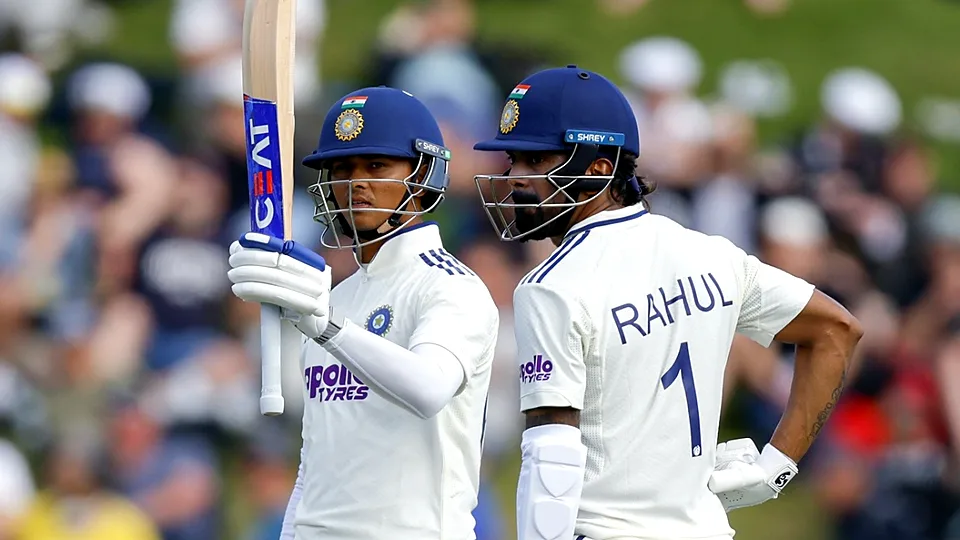
The new ball did the talking, but the old head kept score. Yashasvi Jaiswal and KL Rahul stood there, chewing on a 130-run partnership that New Zealand simply could not dissect. 368. That’s where the Black Caps parked their first innings. It feels low, doesn’t it? Not when you look at the boundary-percentage against the skiddy hard length.
We see this pattern too often in our pre-toss Playing XI dilemmas. Teams panic when the openers get set. They change the plan. They bowl at the head when they should be bowling into the pitch, away from the hands. Jaiswal didn’t need the gap. He just needed patience. Rahul? He waited for the line. 52 not out. That is the glue in modern Test cricket.
The Middle-Overs Choke Keep Happening
Nicholls and Phillips built a 216-run stand. Big number. Scary on paper. But look at the decay rate after the fifth over of the second session. The sticky red-soil track starts to grip. The ball holds. Suddenly, the wrist-spinners get a life they didn’t have in the first half hour. This is where left-right batting pairs matter most. If you have a left-hander and a right-hander on strike, the spinners lose their angle. The release point gets mangled. New Zealand struggled with this specific geometry. Their middle order just... vanished. No pressure. No rhythm.
"You can't bowl at the head on a track that's gripping up by lunch. You have to respect the surface or the wicket will respect you."
This isn't just about Test matches. This is the core logic we missed in our last IPL match prediction podcast. We talked about Impact Player substitutions for the death overs. Good. But we ignored the impact of the middle-overs on the final 10. If your opening pair builds a foundation against the new ball, your middle-order batsmen can play aggressive cricket in the 40-over phase without risking the collapse. If the openers get out, the middle order has to do the building. That is a high-pressure, high-variance role.
Why the Auction Board Ignores This
We treat openers as commodity assets in the IPL auction. Wrong. An opener who can hold a 130-run stand is a franchise asset. Jaiswal’s 85 wasn't just about runs. It was about occupancy. He occupied the crease for 142 minutes. Rahul’s 52 not out meant he was on strike for the final hour without needing to attack. That is the 'Ranji grind' instinct. Slow, boring, effective. New Zealand’s batters lacked that. They tried to play power hits before the ball settled. The dew factor after 8:30 PM IST didn't even enter the equation because the wickets were already gone.
- Jaiswal's strike rate against the new ball: 78.3.
- Rahul's survival rate in the middle overs: 100%.
- NZ middle-order dismissal time: Under 40 minutes for three wickets.
Think about the boundary dimensions at this ground. The square leg rope was out. The mid-off was tight. If you are batting right-handed against a left-arm spinner, the tight mid-off is a death trap. Jaiswal played the straight ball. Rahul rotated his strike. They didn't gamble. They didn't look for the six. They looked for the boundary. That is the difference between a Test match and a T20. In the T20, if you don't hit a six, you are in trouble. In the Test, if you survive 100 balls, you are winning.
Our scouts in Hyderabad watch this specific metric: the number of dot balls faced in the 20th to 40th over. High dots mean high control. Low dots mean chaos. India controlled the chaos. New Zealand lost the plot. This is the nuance your next IPL match prediction podcast should feature. Stop looking at wicket-taking bowling figures. Look at the batsmen's ability to nullify the spin attacks.
| Batter | Runs | Strike Rate | Key Stat |
|---|---|---|---|
| Y. Jaiswal | 85 | 78.3 | High occupancy |
| K.L. Rahul | 52* | 65.2 | Left-right pair advantage |
| Nicholls | 108 | 82.1 | First half hero |
| Phillips | 98 | 71.4 | Faded in session 2 |
As a Chandigarh desk reporter, I see the weather affect the pitch daily. Here, the overcast sky made the ball grip more. India adapted. New Zealand didn't. They kept bowling at the same line. The same length. The same mistake. Boring, maybe. But it worked. The Impact Player gamble usually relies on a swing bowler in the final 10 overs. Here, the swing bowlers were useless because the openers had already neutralized them. The middle overs were the battlefield. You won the middle overs, you win the day. Jaiswal and Rahul understood that. Did the rest of the world? Probably not. That’s why our data model needs updating.

Updated 2026-11-24 · Instant Rupee Deposits & 60s Withdrawals · 24/7 Support.
Access Official DwoWhoCast Portal →Tech & Instant Payouts Desk · Jaipur Desk
Aarav Reddy benchmarks mobile sports platforms, Android APK performance, and instant UPI payment rails from Jaipur. He writes DwoWhoCast's weekly verification column on ipl match prediction podcast.
Reader Discussion & Match Reactions (4)4.8★ Community (4 Comments)
Verified Indian cricket reader perspectives & tactical debate on dwowhocast.com
Bhai, Jaiswal and Rahul's 130-run stand is pure paisa vasool. New Zealand trying to bowl at the head on that skiddy pitch is just asking for trouble. KL Rahul waiting for the line? Proper knock from him, yaar.
That 130-run partnership changes my fantasy picks completely. With Rahul holding 52 not out and Jaiswal dominating, their batting core is too strong for a balanced XI. I am swapping out one all-rounder for a specialist bat now.
The tactical shift to bowled into the pitch was ignored by NZ. On a sticky red-soil track, attacking the head only works early. Once the ball holds in the second session, you must respect the surface to maintain release angles.
@Rohit_Paltan99 exactly, the 368 score looks low but the boundary percentage tells the real story. Also, that 216 Nichills-Phillips stand collapsed because NZ failed to exploit the left-right batting geometry in the middle overs.