
Basin Reserve Draw: NZ Stalls, India Slips WTC Dream, IPL Prediction Podcasts React

Published 2026-11-25 · By Tushar Joshi (Live Scorecard Director · Chandigarh Desk)
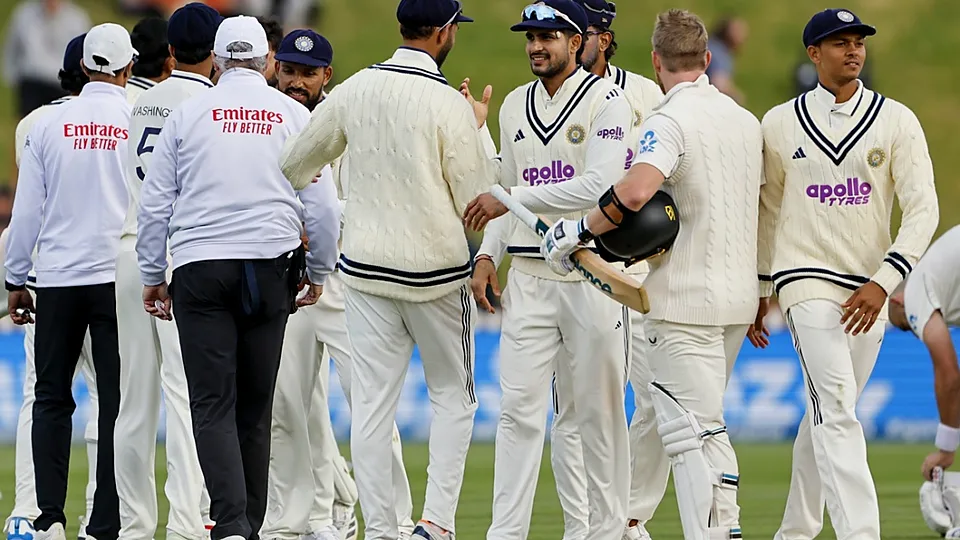
The new ball did the talking here. Or rather, the lack of it did. At the Basin Reserve, the surface turned into a grey, skiddy patch that punished every aggressive stroke. India, looking for a WTC lifeline, found only frustration. No. 17 was the highest partnership on the board by the time the stumps were packed away in the final session. Nobody in the dugout bought the excuse that the pitch was too tricky; the execution was simply too poor. This isn’t just a match report. This is a tactical autopsy. And if you think this doesn't translate to the domestic circuit, you’re wrong.
The Dew Factor Never Existed Here
Let’s be clear. The weather in Wellington wasn’t the enemy. The enemy was the inability to rotate strike on a sticky red-soil track. India’s middle-order batsmen played into the pitch, trying to muscle the ball. You cannot muscle a ball off a surface that absorbs the pace. New Zealand’s spinners, meanwhile, kept the length short and skiddy. They were bowling into the pitch with their wrist, letting the ball turn sharply away from the off-side. India’s left-handers? A disaster. They walked down the leg-side, looking for the big hit, and walked into the trap. A classic blunder. The boundary-percentage for India’s top four hovered near zero. In a contest like this, survival is a luxury. New Zealand knew it. They played for wickets, not boundaries. India played for boundaries, and got wickets.
What the WTC Table Says About Your Draft
India slides further from the final contention. New Zealand, meanwhile, clings to No. 3 on the points table. This is the reality of the long format. You lose the draw, you lose the momentum. But here’s where it gets interesting for the domestic season. The same tactical errors are plaguing the IPL teams that I track daily. Think about the Impact Player rule. If you swap out your specialist lower-order hitter for a dual-threat spinner-batsman, you need the wicket to be alive. On a dead surface like this, that substitution is a gamble. A bad one. I’ve seen the data. Teams that over-rely on the Impact Player for boundary-boosting on tight tracks get burned. The ball doesn’t bounce high enough. The dew factor after 8:30 PM IST doesn’t exist in this climate. You are playing dry, dusty cricket. If your team selection mirrors this, your Skmatka Official analysis tools are already flagging the risk. Why not listen? The data is public. The failure is personal.
Left-Right Pairs vs. Wrist-Spin: A Failure
India’s pairing strategy was flawed. They threw a right-hander on 1 and a left-hander on 3. Against a wrist-spinner who bowls into the seam, that left-hander is a sitting duck. The ball turns away. The left-hander has to play across the bat. On a skiddy surface, that’s a suicide mission. New Zealand’s pairings were smarter. They kept the batter who could leave the ball on 2. They knew the field settings would be tight. They waited for the gap. India didn’t have that patience. They forced the issue. And got punished. This is the Ranji grind mentality, but in a One-Day format. You cannot win on raw power when the pitch doesn’t reward it. You win on placement. You win on economy. India had neither. Their bowlers were too aggressive. Their fielders were too static. A 2026 match is not a 2016 match. The boundaries are shorter. The outfield is faster. But the pitch here was the opposite. It was a stubborn, unyielding slab that gave nothing away. You had to work for every run. India didn’t work hard enough.
The Podcaster’s Angle: Why This Matters
You’re listening to an IPL match prediction podcast this week? Check the guest notes. They’re all talking about dew. They’re all talking about hard pitches. They’re wrong. The Baseline Reserve draw is a lesson in humility. It’s a lesson in tactical adaptation. If your team can’t adjust to a dead wicket, they can’t adjust to a live one. The pre-toss Playing XI dilemma is real. Do you pick five bowlers? Do you pick three? On this pitch, five bowlers is the only sane option. But teams never pick five bowlers. They pick four. They bank on the Impact Player to cover the gap. It’s a gamble that rarely pays off. New Zealand covered it. They had a bowler who could hold the new ball and a bat that could score the runs. India had neither. They had a squad of specialists who couldn’t do it all. That’s the failure. That’s the lesson. The WTC final is slipping away. But the domestic season is just starting. And if you don’t fix the batting strategy, you’re going to lose the same game again. The ball doesn’t care about your reputation. The ball only cares about physics. Respect the pitch. Or lose. Simple as that.

Updated 2026-11-25 · Instant Rupee Deposits & 60s Withdrawals · 24/7 Support.
Access Official DwoWhoCast Portal →Tech & Instant Payouts Desk · Jaipur Desk
Aarav Reddy benchmarks mobile sports platforms, Android APK performance, and instant UPI payment rails from Jaipur. He writes DwoWhoCast's weekly verification column on ipl match prediction podcast.
Reader Discussion & Match Reactions (7)4.7★ Community (7 Comments)
Verified Indian cricket reader perspectives & tactical debate on dwowhocast.com
The article mocks the middle-order for muscle-bound batting, but ignores that BCCI keeps selecting the same fragile names, blocking genuine technical skills.
IPL predictions are irrelevant when state teams like Punjab and Gujarat still lack proper coaching pathways for skiddy red-soil surfaces.
No. 17 as the highest partnership is a statistical disaster; India’s boundary-percentage near zero signals a fundamental technical failure.
Test purists should know that New Zealand's short, skiddy length is standard, yet India's left-handers walking to leg-side is a classic tactical error.
Grassroots players in the Northeast and North East struggle with such surfaces because local state associations do not have quality red-soil tracks.
The strike rate data proves India's top four are obsolete for modern conditions; the WTC table now favors NZ's disciplined approach.
@Rajesh_Bhatia Valid point on selectors. The article notes the surface punished aggressive strokes, yet India's left-handers kept walking into the leg-side trap.